
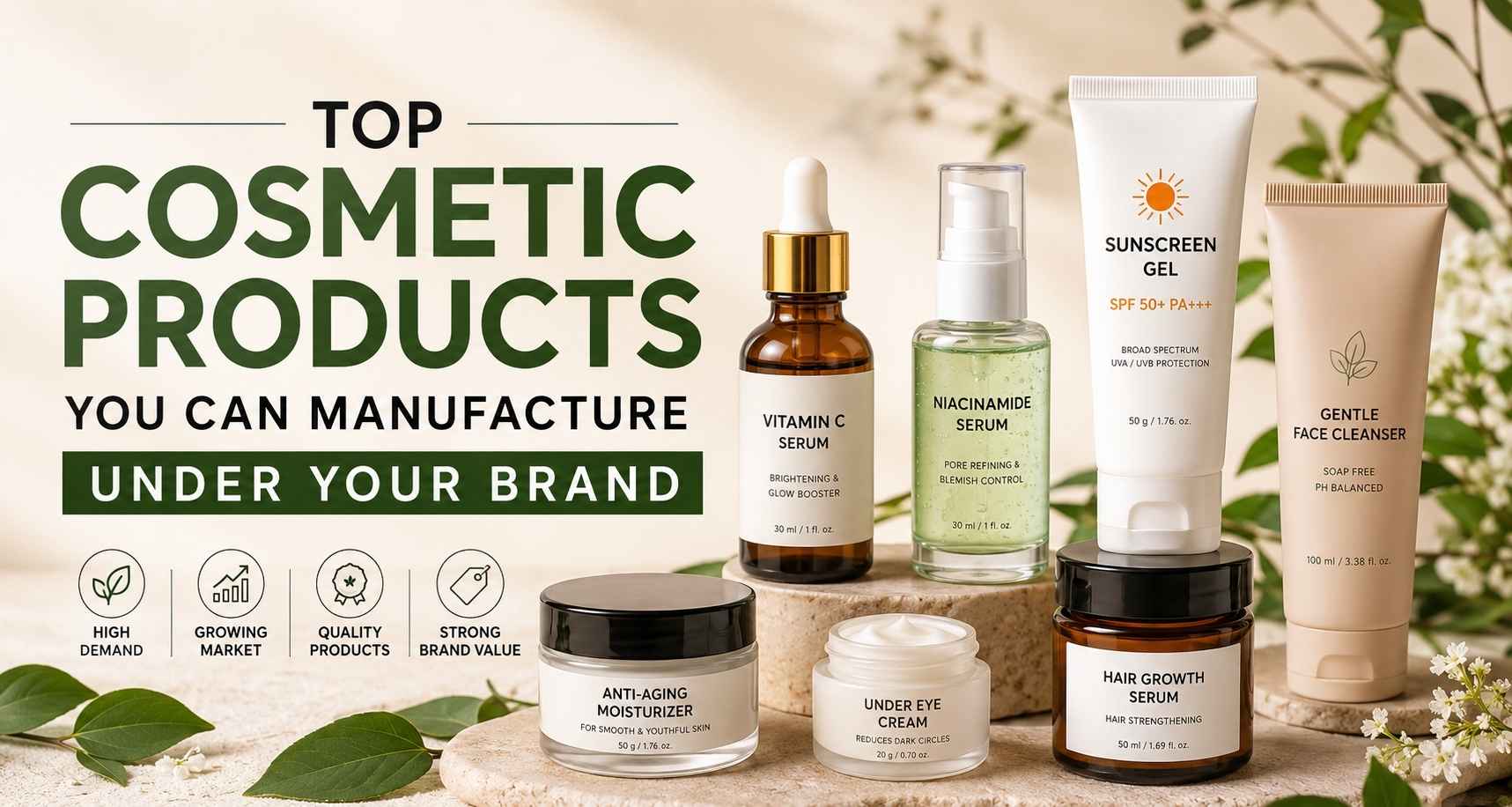
If you are planning to enter the cosmetic or skincare business, the first question should not be, “Which product looks attractive?” The better question is, “Which product has real demand, repeat purchase potential, and enough space for my brand to stand out?”
The Indian beauty and personal care market is growing strongly. Research reports estimate India’s beauty and personal care market at around USD 23.99 billion in 2024, with projected growth at about 10.8% CAGR from 2025 to 2034. Another market report estimates the Indian skincare market at USD 9.27 billion in 2025, growing toward USD 18.58 billion by 2035. These numbers matter because they show that skincare is no longer just a luxury category. It has become a regular-use consumer segment driven by self-care, pollution concerns, social media education, and rising online purchases.
But growth does not mean every product will sell. Many new brands fail because they launch the same generic cream, face wash, or serum without understanding the customer’s actual problem. Today’s buyer is more informed. They know ingredients like niacinamide, vitamin C, hyaluronic acid, peptides, retinol, and AHA/BHA. They compare products online, read reviews, and expect visible benefits. So if you want to manufacture cosmetic products under your brand, your product selection should be based on demand, positioning, formulation quality, and long-term repeat usage.
Below are the cosmetic and skincare products that make the most sense for new and growing brands in India.
1. Vitamin C Serum
Vitamin C serum is one of the strongest products for brands that want to enter the glow, dullness, and pigmentation category. Indian consumers commonly deal with uneven skin tone because of sun exposure, pollution, and lifestyle stress. That makes brightening products consistently relevant.
The opportunity is strong, but this product needs serious formulation care. Vitamin C can oxidize when exposed to air, light, or heat. If the serum changes color too quickly or loses activity, customers will not trust the brand. So packaging matters here. Dark glass bottles, airless pumps, and stable derivatives can make a big difference.
For a new brand, vitamin C serum works best when positioned clearly. Don’t just say “glow serum.” Explain whether it is for dull skin, uneven tone, early pigmentation, or daily antioxidant support. The clearer your positioning, the easier it is for customers to understand why they should buy it.
2. Niacinamide Serum
Niacinamide serum is one of the safest and most practical products to start with because it solves multiple everyday concerns. It is commonly used for oily skin, acne marks, visible pores, uneven texture, and barrier support.
This product has become popular because it is easier for beginners to understand and easier for brands to explain. Unlike some stronger actives, niacinamide is generally seen as more beginner-friendly when formulated properly.
For a brand owner, niacinamide offers a good balance between demand and formulation stability. It is suitable for D2C brands, dermatologist-led brands, and even salon or clinic-focused skincare lines. If you want to target young consumers, oily skin users, or acne-prone audiences, this is one of the most sensible products to consider.
3. Hyaluronic Acid Sunscreen
Sunscreen has changed completely in India. Earlier, many people used sunscreen only during summer or while travelling. Now, awareness is shifting toward daily use. Reports also highlight multi-tasking skincare products as a growth opportunity in India’s beauty and personal care market, and sunscreen with hydration fits that trend well.
A hyaluronic acid sunscreen gives two benefits in one product: sun protection and hydration. This matters because many consumers avoid sunscreen due to heaviness, dryness, white cast, or sticky feel. A lightweight sunscreen with skincare benefits has better daily-use potential.
This is a high-demand category, but it is also a technical category. SPF products require proper formulation, testing, and compliance. If you want to manufacture sunscreen under your brand, don’t treat it like a simple cream. Work with a manufacturer who understands sunscreen stability, texture, and testing requirements.
4. Gentle Face Cleanser
A gentle face cleanser may not look as exciting as a serum, but it is one of the most important products in skincare. Every routine starts with cleansing. That makes it a repeat-purchase product.
The demand is strong because people are moving away from harsh face washes that make the skin dry or tight. Consumers now look for cleansers that clean the skin without damaging the skin barrier. This is especially important for acne-prone, sensitive, and dry skin users.
For new brands, a cleanser is a good foundation product. It helps build daily usage and brand recall. If your cleanser feels good, smells clean, and does not irritate the skin, customers are more likely to come back.
5. Pigmentation Cream
Pigmentation creams have strong long-term demand in India because uneven skin tone, tanning, dark spots, and melasma-like concerns are common. This product category appeals to both men and women and works across age groups.
The important thing is to avoid exaggerated claims. A cosmetic product should not promise medical treatment or permanent cure. Instead, position it as support for uneven tone, dullness, dark spots, and visible skin clarity.
A good pigmentation cream should be built around a smart combination of ingredients. It may include brightening agents, soothing ingredients, hydration support, and barrier-friendly components. The product should not be too harsh because Indian users often combine multiple products without understanding interactions.
6. Retinol Face Serum
Retinol is growing because anti-aging skincare is starting earlier. Many consumers in their mid-20s and early 30s are now looking for products that support fine lines, texture, and skin renewal.
This is not a beginner product for every brand. Retinol needs careful positioning and proper usage instructions. Customers should understand that it is usually used at night, introduced slowly, and paired with sunscreen during the day.
If your brand wants to look more premium or dermatologist-inspired, retinol can be a strong product. But poor formulation, wrong concentration, or weak user education can lead to irritation complaints. So this product needs both good manufacturing and responsible communication.
7. Multi-Peptide Serum
Multi-peptide serum is a premium skincare product that fits well in anti-aging, skin firmness, and repair-focused positioning. It is not as mass-market as vitamin C or niacinamide, but it appeals to customers who already understand skincare routines.
This product can help a brand move into a higher price segment. Peptides are usually associated with advanced skincare, collagen support, and skin elasticity. The challenge is that customers may not fully understand peptides, so education becomes important.
If you manufacture this product, your content should explain it simply. For example: “Peptides are used in skincare to support smoother, firmer-looking skin.” Avoid overclaiming. Keep it cosmetic and realistic.
8. Anti-Aging Moisturizer
An anti-aging moisturizer is easier for many consumers to use than a strong active serum. It can combine hydration, barrier support, and age-care ingredients in one product.
This category works well because moisturizers are daily-use products. A serum may feel optional to some customers, but a moisturizer is part of a basic routine. If you add anti-aging positioning to it, you increase its perceived value.
For brands targeting women above 30, working professionals, or premium skincare users, this can be a strong product. The texture should not feel greasy, especially in Indian weather. Lightweight creams, gel-creams, and non-sticky formulations often perform better.
9. Aloe Vera Body Lotion
Body care is often ignored by new skincare brands, but it has strong repeat value. Aloe vera body lotion is simple, understandable, and suitable for a wide audience.
The demand comes from dryness, sun exposure, seasonal skin issues, and daily moisturization. Aloe vera also has a familiar, trusted image in India, which makes the product easier to sell.
For mass and mid-premium brands, aloe vera body lotion can be a stable product. It may not create hype like a serum, but it can create repeat purchase if the fragrance, absorption, and skin feel are good.
10. Under-Eye Cream
Under-eye products are growing because screen time, stress, sleep issues, and lifestyle fatigue are common. Consumers look for solutions for dark circles, puffiness, dryness, and tired-looking eyes.
This product should be positioned carefully. Dark circles can have many causes, including genetics, lack of sleep, pigmentation, and health factors. So avoid promising complete removal. A better approach is to position it for hydration, freshness, puffiness support, and smoother-looking under-eye skin.
For a brand, under-eye cream works well as an add-on product. It can increase average order value when bundled with serum, moisturizer, or sunscreen.
11. Hair Growth Serum or Hair Oil
Hair fall is one of the strongest personal care concerns in India. It is emotional, visible, and long-term. That is why hair oils, scalp serums, and hair growth support products continue to attract demand.
Ayurvedic hair oils have strong trust because Indian consumers already understand ingredients like bhringraj, amla, onion seed oil, rosemary, and hibiscus. At the same time, modern scalp serums are growing among urban users who prefer non-sticky products.
If you are building a brand in this category, decide your positioning clearly. Are you making an Ayurvedic oil, a modern scalp serum, or a hybrid product? Each one attracts a different customer. Hair care can be highly profitable, but customer expectations are also high, so claims should be realistic.
12. Sheet Masks
Sheet masks are popular because they offer quick self-care. They are easy to use, visually attractive, and suitable for gifting, travel, salons, and festive offers.
This category is influenced by Korean beauty and social media routines. It is not always the strongest core product for a new brand, but it works well as an add-on or campaign product.
A sheet mask can help your brand look modern and trend-aware. But if you want repeat purchase, the serum inside the mask should feel good and the skin should look fresh after use. Packaging design also plays a big role in this category.
13. AHA/BHA Toner Pads
Toner pads are a newer format in India, but they are gaining attention because they make exfoliation easy. Instead of applying liquid toner with cotton, the customer gets pre-soaked pads for quick use.
AHA/BHA products are usually used for texture, clogged pores, and dullness. The opportunity is strong, but this product needs careful formulation because over-exfoliation can irritate the skin.
This is better for brands targeting skincare-aware customers, not complete beginners. If you launch toner pads, give clear usage instructions. Mention frequency, patch testing, and sunscreen use.
14. SPF Lip Balm
SPF lip balm is a small product, but it has strong daily-use potential. Many people now understand sunscreen for the face, but lip protection is still underdeveloped. That creates an opportunity.
This product is easy to carry, affordable, and suitable for both men and women. It can be sold individually or bundled with sunscreen.
For a new brand, SPF lip balm can be a smart low-ticket product that improves repeat buying and cart value. The key is making it non-sticky, pleasant, and useful in Indian weather.
15. Eye Sunscreen
Eye sunscreen is still a niche category, but it shows where skincare is going: more targeted, more specific, and more routine-based.
The skin around the eyes is delicate, and many people avoid applying regular sunscreen too close to the eyes because of irritation or stinging. A product designed for this area can appeal to premium skincare users.
This is not the first product most new brands should launch. But for an advanced skincare brand, it can create differentiation.
16. Herbal Face Wash
A herbal face wash remains one of the easiest products for Indian consumers to accept. Ingredients like neem, tulsi, turmeric, aloe vera, saffron, and sandalwood already have strong recognition.
The issue is that this category is crowded. So if you manufacture a herbal face wash, don’t make it generic. Choose a specific angle: acne-prone skin, gentle daily cleansing, pollution cleansing, or glow support.
This product can work well for Ayurvedic, natural, and mass-premium brands. It is also a good entry product because face wash has frequent repeat demand.
17. Face Gel or Aloe Vera Gel
Face gels are popular because they are lightweight and work well in Indian climate. Aloe vera gel, cucumber gel, and hydration gels can be used after sun exposure, after shaving, or as a daily light moisturizer.
This product is simple, but quality matters. Many low-quality gels feel sticky, artificial, or heavily fragranced. A clean, soothing, non-sticky gel can perform well if positioned properly.
For private label brands, this is a practical product because it has wide usage and lower explanation burden.
18. Day Cream With SPF
Day creams with SPF sit between skincare and sun protection. Many customers want fewer steps in their routine, especially beginners. A day cream with SPF can appeal to that audience.
However, this product should not be confused with full sunscreen unless the SPF testing and claims are properly supported. The safest approach is to be clear in positioning: daily day cream with sun protection support, where permitted and tested.
This product is especially useful for brands targeting working women, beginners, and consumers who prefer simple routines.
19. De-Tan Face Pack or Mask
De-tan products have strong demand in India due to sun exposure, outdoor work, travel, and pollution. Face packs and masks are easy for customers to understand and can be sold across online and salon channels.
This category works well when it gives a fresh, clean feel after use. Clay, charcoal, turmeric, sandalwood, licorice, and fruit extracts are commonly used depending on positioning.
Again, avoid overclaiming. A de-tan mask should not promise permanent fairness or medical skin lightening. Keep it focused on dullness, tanning appearance, and refreshed skin.
20. Herbal Hair Oil
Herbal hair oil deserves separate attention because it is one of the most culturally accepted products in India. Even with modern serums growing, hair oil still has deep trust.
A brand can build strong positioning around ingredients like amla, bhringraj, hibiscus, coconut oil, sesame oil, onion oil, rosemary, or fenugreek. The product can be Ayurvedic, modern herbal, or premium natural depending on your target audience.
The key is sensory experience. If the oil is too sticky or smells too strong, many urban customers may not use it regularly. A lighter oil with good packaging can help bridge traditional trust and modern convenience.
How to Choose the Right Products for Your Brand
Don’t select products just because they are trending. Select them based on your customer, budget, and positioning.
A practical starting combination can be:
- One daily-use product, such as cleanser or moisturizer.
- One problem-solving product, such as niacinamide serum or pigmentation cream.
- One high-demand protection product, such as sunscreen or SPF lip balm.
This gives your brand a better structure. You are not just launching random products. You are creating a small routine.
For example, a beginner skincare brand can start with cleanser, serum, and sunscreen. A natural brand can start with herbal face wash, aloe vera gel, and herbal hair oil. A premium skincare brand can start with peptide serum, retinol serum, and anti-aging moisturizer.
What New Brands Should Be Careful About
Cosmetic products are regulated in India under the Cosmetics Rules, 2020. CDSCO provides the central regulatory framework, while manufacturing licenses are handled through the relevant licensing system. If you are using a third-party manufacturer, make sure the product is made under a valid cosmetic manufacturing setup and that labeling, ingredients, batch details, and claims are compliant.
Also, do not make medical claims for cosmetic products. A cream cannot claim to cure a disease. A hair oil should not guarantee hair regrowth in a medical sense. A pigmentation cream should not promise permanent treatment. Cosmetic claims must stay realistic and product-appropriate.
Before manufacturing under your brand, check these things with your manufacturer:
- Product sample and final texture.
- Ingredient list and claim support.
- Stability of formulation.
- Packaging compatibility.
- Label compliance.
- Batch testing and documentation.
- Minimum order quantity and production timeline.
This is where many new brands make mistakes. They spend money on logo and packaging but do not check product stability, user experience, or compliance properly.
Which Products Are Best for New Brands?
For most new brands, the best products are those that are easy to understand, have repeat use, and do not require too much customer education.
Good beginner products include gentle face cleanser, niacinamide serum, aloe vera gel, body lotion, herbal face wash, SPF lip balm, and herbal hair oil.
More advanced products include retinol serum, multi-peptide serum, sunscreen, AHA/BHA toner pads, and pigmentation creams. These products can perform very well, but they need better formulation support, clearer instructions, and stronger compliance review.
Final Advice
The cosmetic market in India is full of opportunity, but it is also crowded. You do not need to manufacture every trending product. You need to choose products that match your audience and right cosmetic manufacturing companies will help you to manufacture your desired product, your budget, and your brand positioning.
If you want to build a serious brand, start with fewer products and make them properly. Focus on quality, packaging, texture, realistic claims, and repeat purchase. A well-made cleanser, serum, sunscreen, or hair oil can do more for your brand than ten average products launched without planning.
The best cosmetic products to manufacture under your brand are not always the most hyped ones. They are the products that solve real customer problems and bring people back for the next purchase.
Ready to Launch Cosmetic Products Under Your Brand?
If you are planning to start or expand your cosmetic and skincare brand, choosing the right products is only the first step. The real difference comes from quality formulation, proper manufacturing, attractive packaging, and consistent supply.
At Aydis Labs Private Limited, we help brands manufacture high-demand cosmetic and skincare products under their own label with a focus on quality, customization, and scalable production.
Connect with our team today to discuss your product idea and start building your cosmetic brand with the right manufacturing partner.